

Introduction
Chronic hives (chronic spontaneous urticaria, or CSU) and nasal polyps are two frustrating conditions often linked to allergic and immune system dysfunction. For patients who don’t respond to antihistamines or steroids, Zerafil (Omalizumab), developed by Cinnagen, offers a targeted biologic solution by blocking Immunoglobulin E (IgE)—the key driver of allergic inflammation.
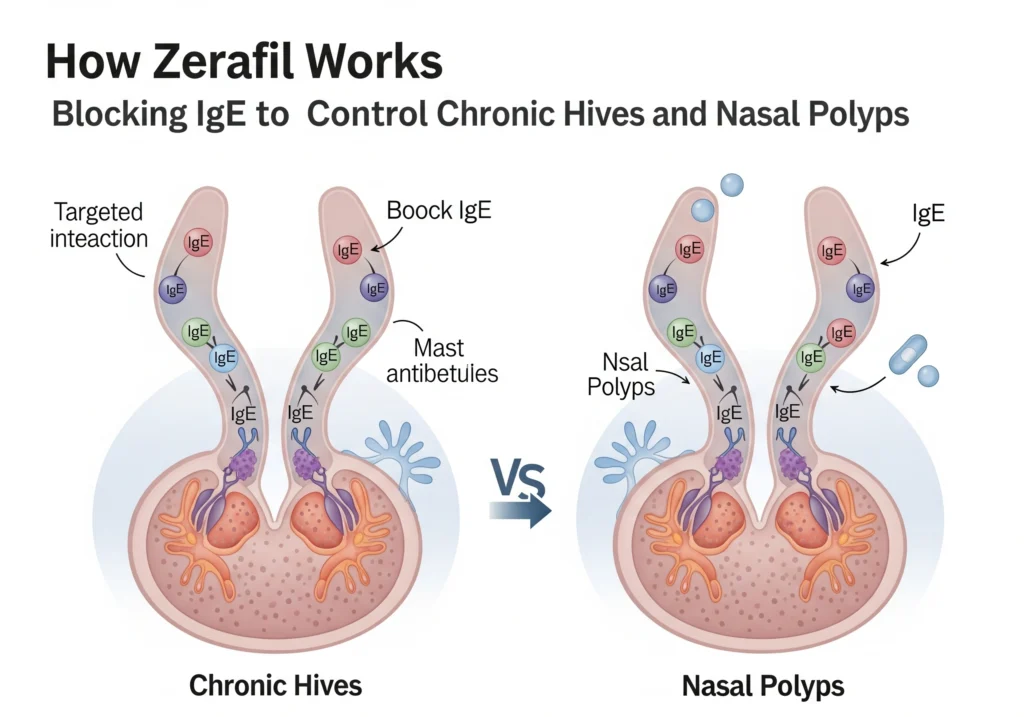
This article explains how Zerafil works to control chronic hives and nasal polyps, its mechanism of action, clinical effectiveness, dosage guidelines, and what patients can expect from treatment.
Understanding IgE’s Role in Chronic Hives & Nasal Polyps
1. Chronic Spontaneous Urticaria (CSU)
- CSU causes recurrent, itchy hives lasting more than 6 weeks without an obvious trigger.
- In about 30-50% of cases, it’s driven by autoimmune mechanisms where IgE antibodies mistakenly activate mast cells, releasing histamine and inflammatory cytokines.
2. Nasal Polyps
- Nasal polyps are soft, noncancerous growths in the sinuses, often linked to chronic rhinosinusitis (CRS).
- Allergic inflammation (especially IgE-mediated reactions) contributes to polyp formation, causing congestion, loss of smell, and infections.
Both conditions involve mast cell activation and excessive IgE signaling, making IgE blockade a logical treatment approach.
How Zerafil Blocks IgE to Stop Inflammation
Zerafil (Omalizumab) is a monoclonal antibody that binds to free IgE in the bloodstream, preventing it from attaching to mast cells and basophils. This disrupts the allergic cascade in two key ways:
1. Preventing Mast Cell Activation
- Normally, IgE binds to mast cells, priming them to release histamine, leukotrienes, and cytokines when exposed to allergens.
- Zerafil neutralizes free IgE, reducing mast cell reactivity and stopping the release of inflammatory chemicals.
2. Lowering IgE Receptor Expression
- Over time, Zerafil also downregulates FcεRI receptors (the docking sites for IgE on mast cells).
- This makes mast cells less sensitive to allergens, further reducing inflammation.
Clinical Evidence: Zerafil for Chronic Hives & Nasal Polyps
1. Zerafil for Chronic Hives (CSU)
- Studies show that 75-80% of CSU patients experience significant improvement in hives within 3-6 months of treatment.
- Itch severity and hive frequency drop by 50-70% in responders.
- Approved for adults and adolescents (12+ years) with antihistamine-resistant CSU.
2. Zerafil for Nasal Polyps
- In patients with chronic rhinosinusitis with nasal polyps (CRSwNP), Zerafil:
- Reduces polyp size (seen on CT scans).
- Improves nasal airflow and restores sense of smell in some cases.
- Decreases the need for repeat sinus surgeries.
Who Should Use Zerafil for These Conditions?
Ideal Candidates for Zerafil
- Chronic Hives (CSU) Patients:
- Those with daily or frequent hives unresponsive to high-dose antihistamines.
- Patients dependent on oral steroids to control outbreaks.
- Nasal Polyp Patients:
- Those with recurrent polyps despite surgery or steroid sprays.
- Individuals with asthma + nasal polyps (a common overlap).
Who Should Avoid Zerafil?
- People with acute infections (parasitic, viral, or bacterial).
- Those with a history of anaphylaxis to Omalizumab.
- Pregnant/nursing women (unless benefits outweigh risks).
Dosage & Administration
- Chronic Hives:
- 150-300 mg every 4 weeks (adjusted based on IgE levels and body weight).
- Nasal Polyps:
- Similar dosing, often combined with intranasal steroids.
- Given as a subcutaneous injection (under the skin).
- First doses should be supervised (due to small anaphylaxis risk).
Side Effects & Safety
Most side effects are mild and temporary:
- Injection site reactions (redness, itching).
- Headache or fatigue.
- Mild joint pain.
Rare but Serious Risks:
- Anaphylaxis (occurs in <0.1% of patients).
- Parasitic infections (IgE helps fight parasites).
Patients should stay for observation 2 hours after the first dose.
Zerafil vs. Alternative Treatments
| Treatment | How It Works | Pros | Cons |
|---|---|---|---|
| Zerafil (Omalizumab) | Blocks IgE | Targets root cause | Requires injections |
| High-Dose Antihistamines | Blocks histamine | Easy to take | Often ineffective in CSU |
| Oral Steroids | Reduces inflammation | Fast relief | Long-term side effects |
| Dupilumab (Dupixent) | Blocks IL-4/IL-13 | Also helps eczema | More expensive |
Patient Testimonials & Real-World Results
- “After 3 months on Zerafil, my hives disappeared completely.”
- “I had 3 sinus surgeries before Zerafil—now my polyps haven’t returned in 2 years.”
- “No more steroid dependence. Zerafil changed my life.”
Conclusion
Zerafil (Omalizumab) is a revolutionary treatment for chronic hives and nasal polyps, offering relief where traditional therapies fail. By blocking IgE, it calms the immune overreaction driving these conditions, reducing symptoms and improving quality of life.
If you suffer from uncontrolled CSU or recurrent nasal polyps, ask your doctor if Zerafil could be right for you.

3 Responses
dsfsdf
dsfsdfsda sdfgf fserff gghdf h gh gfd
g
gdfh
gf
hfg
h
fgh
fgh
fg
h
dsfsdfsdf
sdf
sd
fsd
f
sdf